Oh, to be 86 again
Life goals from Charlie Munger.
Last week, The Wall Street Journal ran a great piece on Charlie Munger's final decade.
Despite losing vision in one eye and much of his mobility by his nineties, he forged ahead.
This was nothing new for him.
By his early thirties he had already buried his 9-year-old son, Teddy, who died of leukemia, and gone through a divorce that left him nearly broke.
Then, in the '70s, he watched his investment partnership drop by roughly 50% in the 1973–74 bear market and came out limping.
Again and again, for almost a century, he picked himself up, refusing to wallow.
Right up until his death at 99, he kept burning through an endless pile of books, helping a young neighbor, Avi Mayer, build a real-estate company that went on to buy thousands of garden apartments in Southern California, and tinkering away on his side hobby of designing college dormitories.
My business partner Chris and I were lucky enough to spend a fair amount of time with him during his twilight years. I can confirm that he was hilarious and razor sharp until the very end—often holding court until late in the night at dinner parties full of what he jokingly dubbed his "groupies" (young investing nerds like us).
Here's a story that captures how old he was when we met:
We asked him about inheritance, and he mentioned that most of his wealth would go to his children and grandchildren.
"Aren't you worried you'll spoil your grandchildren, Charlie?" Chris asked.
"My grandchildren are FIFTY YEARS OLD!" he replied, with a laugh.
My favorite excerpt from the WSJ piece:
"Near the end of life, Munger leaned on humor for strength.
He told family members that Diet Coke was responsible for his longevity, lightening the mood.
And he shared a wish with a visitor.
'Oh, to be 86 again,' he said."
Charlie's life wouldn't be ideal for most people. He was a bonafide polymath who spent 80% or more of his day with his head in a book or an annual report.
Most people's brains aren't built for that. Mine certainly isn't.
But here's a few of Charlie's key ideas that we should all apply:
-
"Always take the high road, it's far less crowded" He didn't waste time on bad people and focused on operating in a way that prioritized win-win outcomes. If he trusted you, that was it—he didn't want to have a 60-page contract.
"The great lesson of life is to get toxic, unreliable people the hell out of your life — and do it fast."
-
"The best way to get what you want is to deserve what you want." One of his favorite ideas was that the best way to get a great spouse, great friends, and great partners is to deserve them. That's a very un-2025 idea—just quietly become the kind of person other good people are happy to bet on and build a life with.
-
"Envy, resentment, revenge, and self-pity are disastrous modes of thought. It's very counterproductive for an individual to feel like a victim—even if he is." By any normal standard, he had earned the right to be bitter. Divorce, the death of a child, major health problems. Instead, he chose to push on and continue contributing.
-
"I constantly see people rise in life who are not the smartest, sometimes not even the most diligent, but they are learning machines." It's hard not to succeed when you read every day.
-
"Invert, always invert!" My favorite Mungerism is inversion: the idea that, instead of trying to predict what will make you happy, focus on what you know makes you miserable, then avoid it.
He famously gave a speech about How To Guarantee a Life of Misery (do drugs, let envy and jealousy consume you, be unreliable, etc) and said that the best way to think through a problem was to work in reverse.
If your goal is to help your children, write down all the reliable ways to ruin their lives—and then work through how to avoid those things.
If your goal is a good life, list the habits that would produce a bad one and treat them like poison.
In 2017, I wrote an article about how Chris and I use inversion to avoid hating our lives.
There's a famous saying: "Never meet your heroes. They'll only disappoint you."
Not Charlie. He was the real deal, and his life is worth studying.
Originally published in the I own a misunderstood platypus... issue of Never Enough.

Andrew · Victoria · December 4, 2025
Read next
I gave $16 million dollars away
What I learned about giving money away—and why scientific research is the part of philanthropy that feels most like venture capital.
ReadRewriting fear
When you recall a fear and your body doesn't panic, your brain re-files the memory as 'not a big deal.' That's how I went from sweating through my shirt to cool as a cucumber.
ReadI spent 25 years treating the wrong thing
On waking up in Maui certain I had cancer, the little pink pill that finally turned my brain into a library, and the prison most of us live in without realizing the door is unlocked.
Read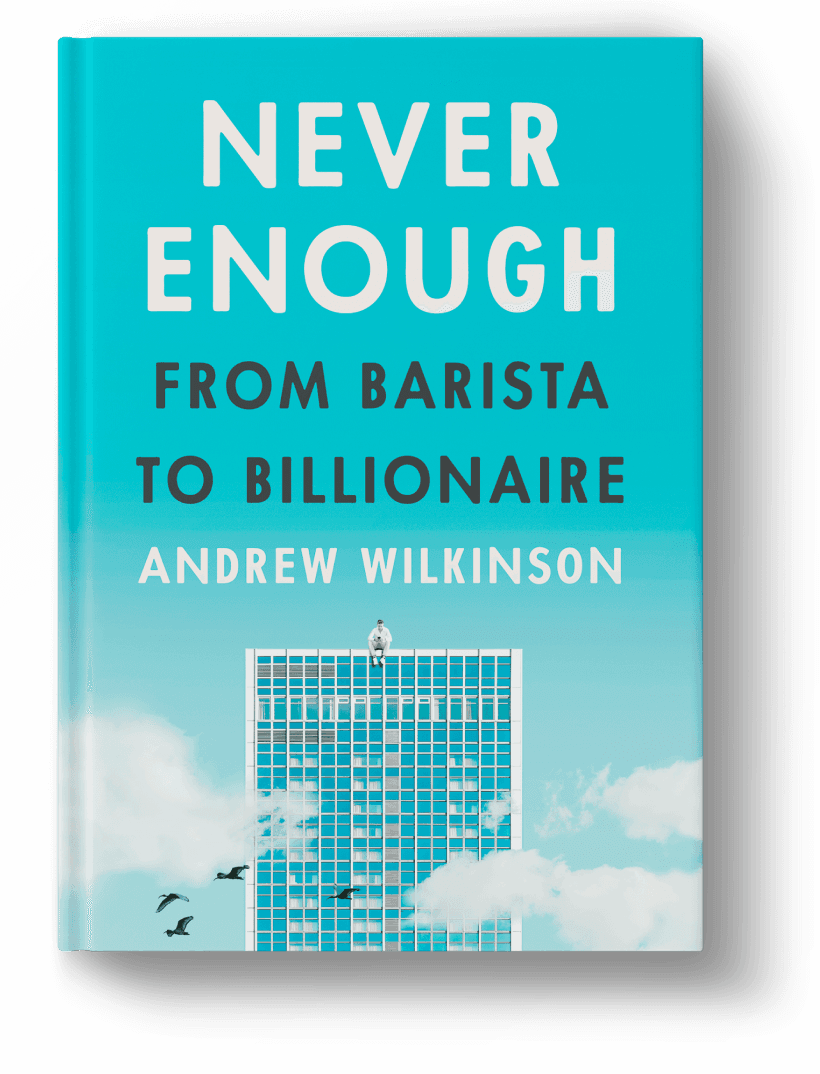
The book
I wrote a book.
320 pages on why having a lot didn’t fix anything. Out now in hardcover, ebook, and audiobook.
Read about the bookKeep reading
The newsletter is free.
Thirty thousand people read it.